Fort Worth Is Now the 10th Largest City in the U.S. What That Means for Homebuyers, Sellers, and Investors
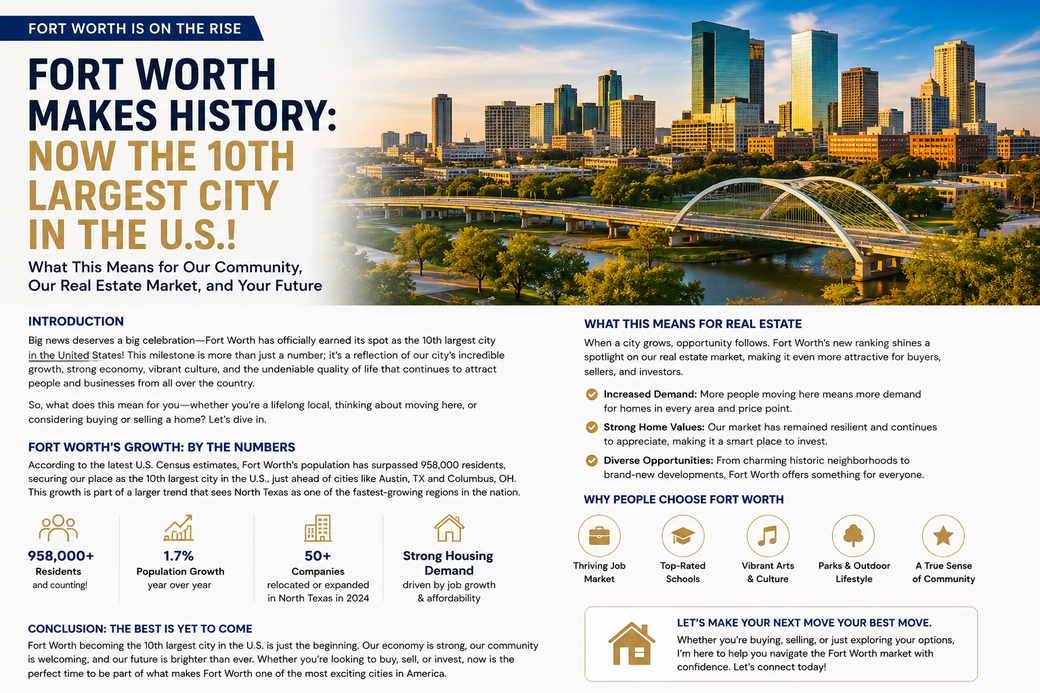
Fort Worth just hit a milestone that’s bigger than a headline it’s a signal. According to newly released U.S. Census estimates, Fort Worth is now officially the 10th largest city in the United States, reaching about 1,028,117 residents after adding more than 19,000 people in a single year.
If you live here, you can feel it: new neighborhoods rising, more restaurants and retail, expanded job growth, and a steady stream of people relocating to North Texas. So the real question becomes: what does “Top 10 city” status mean for Fort Worth real estate—and for you?
Fort Worth’s Growth Isn’t Slowing Down, It’s Spreading
Fort Worth’s boom isn’t happening in one pocket. Growth is radiating outward, especially in areas tied to jobs, schools, and new construction corridors. A great example is ZIP code 76177, which has been highlighted as one of the fastest-growing areas in North Texas.
More people moving in usually brings three things to housing:
- More demand (buyers + renters)
- More development (new builds + infrastructure)
- More competition (especially for well-priced homes)
What the Numbers Say About the Fort Worth Housing Market (2026 Snapshot)
Even with growth, the market is showing signs of balance meaning opportunities exist on both sides of the deal.
Here are a few recent data points that help tell the story:
- Median Fort Worth home price: about $323,500 (January 2026), with inventory around 3.2 months.
- April 2026 median price: about $334,995, with 3.7 months of inventory and ~53 days on market.
- Zillow shows an average home value around $299,655, down ~2.5% over the past year (a reminder that pricing strategy matters).
Translation in plain English: Fort Worth is growing fast, but buyers aren’t blindly overpaying like they did during peak frenzy. Homes that are priced right and presented well still move while overpriced listings tend to sit longer.
What This Means If You’re Buying a Home in Fort Worth
When a city grows this quickly, buyers usually worry they “missed the window.” But here’s the good news: a more balanced market can mean more negotiating power, especially compared to the past few years.
Smart buyer moves right now:
- Focus on value pockets (areas with new employers, strong schools, and infrastructure)
- Consider new construction if you want incentives or rate buy-downs
- Get hyper-specific on your “must-haves,” because in a growing city, the right fit goes fast even in a calmer market
What This Means If You’re Selling
“Top 10 largest city” status puts Fort Worth on more relocation lists meaning more eyeballs on listings. But the market is also more educated now, and buyers compare everything.
To win as a seller in 2026:
- Price based on today’s comps, not last year’s headlines
- Make the home feel move-in ready (clean, bright, repaired)
- Use professional marketing (photos + a strong listing description) so your home stands out in a growing inventory environment
What This Means If You’re Investing (or Thinking About It)
Rapid population growth tends to support rentals long-term, but rent trends can shift short-term based on supply. Some reports show Fort Worth rents have cooled compared to last year so underwriting and pricing strategy matter more than ever.
Investor angles to watch:
- Single-family rentals near major employment corridors
- Areas seeing infrastructure + retail expansion
- Neighborhoods where demand is rising but prices haven’t jumped dramatically yet
The Bottom Line
Fort Worth becoming the 10th largest city in the U.S. isn’t just a bragging right it’s a real indicator of momentum.
But in real estate, momentum doesn’t mean “every home sells instantly.” It means you need a smart plan whether you’re buying, selling, or investing.
Categories
Recent Posts